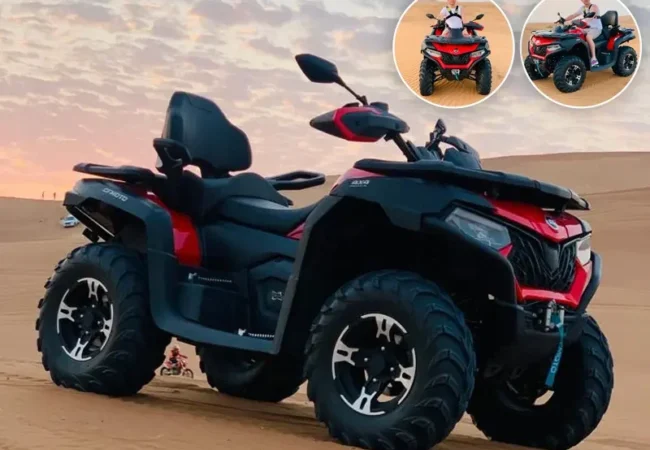
When a buggy price looks unusually low, what's it probably not including?
Usually one of four things: a shorter duration than the headline number implies, a smaller or older machine than the one pictured, a mandatory extra charged only once you arrive, or a per-person figure dressed up to look like a per-buggy one. None of it is necessarily dishonest. It just needs checking before you hand over a deposit.
A price on its own means very little without a duration attached to it. AED 400 sounds cheaper than AED 599 right up until you learn the AED 400 buys fifteen minutes instead of thirty, or a shared seat instead of your own machine for the session. Every rate on this page sits next to its exact duration, thirty minutes, one hour, two hours, spelled out in the price table rather than left as a bare number you have to ask about. That's the first thing worth checking on anything you're comparing it against: does the number in front of you actually say how long it buys, or does that only come out once you're on the phone?
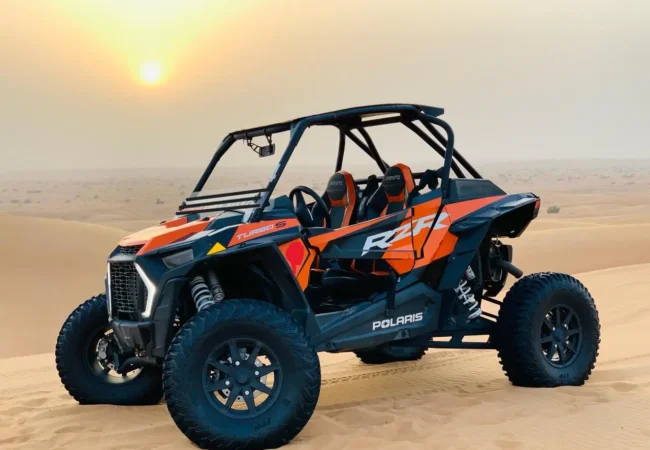
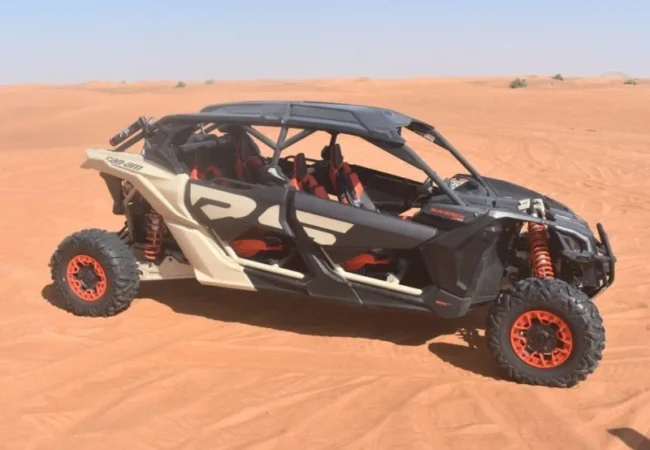
The second common gap is the machine itself. A hero photo of a wide-stance Can-Am X3 sitting next to a bargain price is not proof that's what turns up on the day. Some listings quote the price of their smallest, oldest machine and illustrate it with a photo of their best one. Ask for the model name and the engine size against the specific price you're looking at, the way the fleet here separates a Polaris RZR 1000 from a Can-Am Maverick X3 by name and cc rating rather than lumping everything under one generic "buggy" listing.
Third is the extra that only appears once you're standing at the desk: a fuel surcharge, a "safety fee," a helmet you're told is not actually included. Gear worth checking for upfront is helmet, goggles, fuel and water, all of it bundled into the rate rather than itemised separately. The one cost that legitimately sits outside most Al Lahbab prices, here and elsewhere, is hotel pickup, and a fair listing says so plainly instead of letting you assume it's covered until the invoice arrives.
The fourth gap, a per-person price standing in for a per-buggy one, changes the maths on a group booking more than any of the above, and it gets its own answer further down this guide. Between the four, duration and machine are the two worth confirming first, since they're the easiest for a listing to leave vague.
What should you actually ask before you pay anyone a deposit?
Five questions cut through most vague listings fast: the exact machine and its power, the exact duration, what's bundled into the price versus billed separately, what the cancellation terms actually say, and whether the operator's licence can be checked rather than just claimed. Ask all five before you pay, not after.
Start with the machine and the duration together, since a listing that's vague about one is often vague about both. "A dune buggy for 30 minutes" is not the same commitment as "a Polaris RZR 1000 2-seater for 30 minutes," and only the second version tells you what you're actually climbing into. The fleet on this page is built around that principle: nine machines, nine names, nine specific rates, rather than one generic category with a single number attached.
Next, ask what the quoted figure includes before you ask anything about discounts. Helmet, fuel, water and a guide are the basics worth confirming are bundled in, and hotel pickup is the one line that reasonably sits outside most quotes as long as it's disclosed rather than assumed. If an operator hesitates to break this down over a two-minute WhatsApp exchange, that hesitation is itself useful information.
Cancellation terms matter more than they seem to at booking time, and much more once weather or a schedule change forces the question. Ask specifically what happens if the operator cancels for weather versus what happens if you need to reschedule yourself, since those are two different policies even when a listing only mentions one of them. What a fair version of this looks like is covered later in this guide.
Finally, ask for something that lets you verify the licence rather than just take the claim at face value; a DTCM registration number is the standard here, and a legitimate operator gives it up without being pushed. None of these five questions are awkward to ask, and a well-run operator answers all of them before you've finished typing the sixth.
How do you tell a DTCM-licensed operator from one that isn't, and does it matter?
DTCM stands for Dubai's Department of Tourism and Commerce Marketing, and it's the licensing body every legitimate tour operator in the emirate registers with. A licensed operator can give you a registration number on request; an unlicensed one changes the subject or offers a story instead of a number.
The distinction matters for reasons beyond paperwork. A DTCM licence means the operator has met minimum standards around insurance, guide conduct and vehicle upkeep, and it means there's a body you can actually complain to if something goes wrong on the day. Without it, a bad experience, a machine that wasn't properly maintained, a guide who wasn't properly trained, has nowhere official to go afterward.
In practice, checking is simple: ask for the licence number directly rather than accepting "we're fully licensed" as an answer on its own. A real number is specific and the operator gives it up immediately, the same way the safety details on this page name Dream Land Adventure Tourism as the DTCM-licensed entity behind the bookings rather than leaving licensing as a vague claim in the footer.
It's worth being reasonable about this too. Plenty of smaller, genuinely fine operators exist informally, and a missing licence isn't automatically a scam. What it does mean is you're accepting more risk with less recourse, which might be a fair trade for a very cheap, very casual booking and a poor one for a group of eight paying a serious deposit. Match how much you push on this question to how much money and how many people are actually on the line.
The honest version of this check takes under a minute on WhatsApp: ask for the number, and either you get it immediately or you get a reason not to. Both answers tell you something useful before you've paid anything at all.
What's the real difference between a price listed per person and one listed per buggy?
A per-buggy price covers the whole machine regardless of how many seats are filled. A per-person price multiplies by however many people are in your group. The same headline number can mean a very different total depending on which one you're actually looking at.
Picture the Polaris RZR 4-seater at AED 800. As a per-buggy rate, four people riding together split that one figure, AED 200 each. If a competing listing shows what looks like a lower headline number but that figure is actually per person, the same group can end up paying more in total once every seat is counted separately than the flat AED 800 would have cost. The lower number on the page is sometimes the worse deal once you multiply it out, and that only becomes obvious once you know which pricing model you're reading.
Every rate on this page's price table is per buggy, stated plainly rather than left to assumption, which is exactly the kind of detail worth confirming on anything you're weighing it against. If a listing doesn't say either way, that's the question to ask before the machine, before the duration, before anything else: is this number per buggy, or per person?
The gap widens with group size. Two people in a 2-seater and four people in a 4-seater both split a single machine cost, and the maths tends to favour whichever configuration matches your actual headcount most closely, which is the entire logic behind the 2-seater versus 4-seater breakdown earlier on this page. Combo pricing works the same way: a buggy and BBQ package quoted at one figure for the whole group is a fundamentally different offer than the same figure quoted per plate.
None of this is complicated once you know to check for it. The mistake is assuming every price on every page means the same thing, when in practice the single word "per" next to a number is doing most of the work in whether that number is actually a good one.
How do photos on a booking page sometimes mislead you about the machine you're getting?
A photo of the flagship machine sitting next to the entry-level price is common enough that it's worth treating every hero image with a small amount of scepticism until the specific model is named in writing next to the number you're actually paying.
The mismatch usually runs in one direction: the picture shows the best machine on the fleet, wide stance, long travel, obvious horsepower, while the price tag next to it belongs to the cheapest, smallest one. Nobody photographs the entry-level machine for a hero shot, so the practice isn't always deliberate deception, it's often just standard marketing. The problem is when there's no way to tell which specific machine your specific price actually buys.
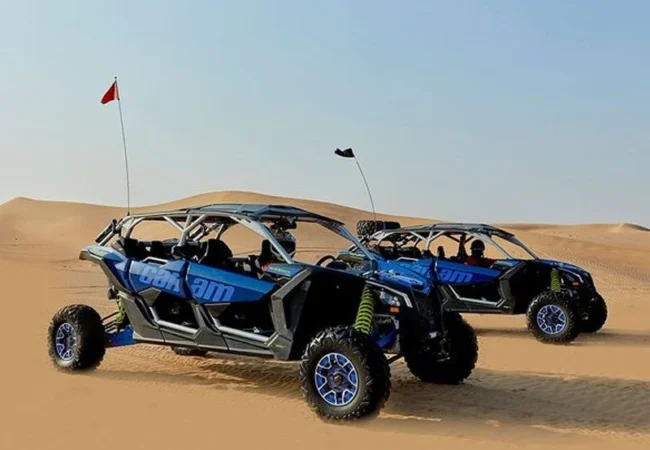
The fix is simple and doesn't require confrontation: ask for the model name attached to the exact price you're being quoted, and treat a vague answer, "one of our buggies," as a small red flag rather than a full one. Every card in this fleet pairs one photo with one named machine and one fixed price, so there's no gap between the picture and what actually gets handed over.
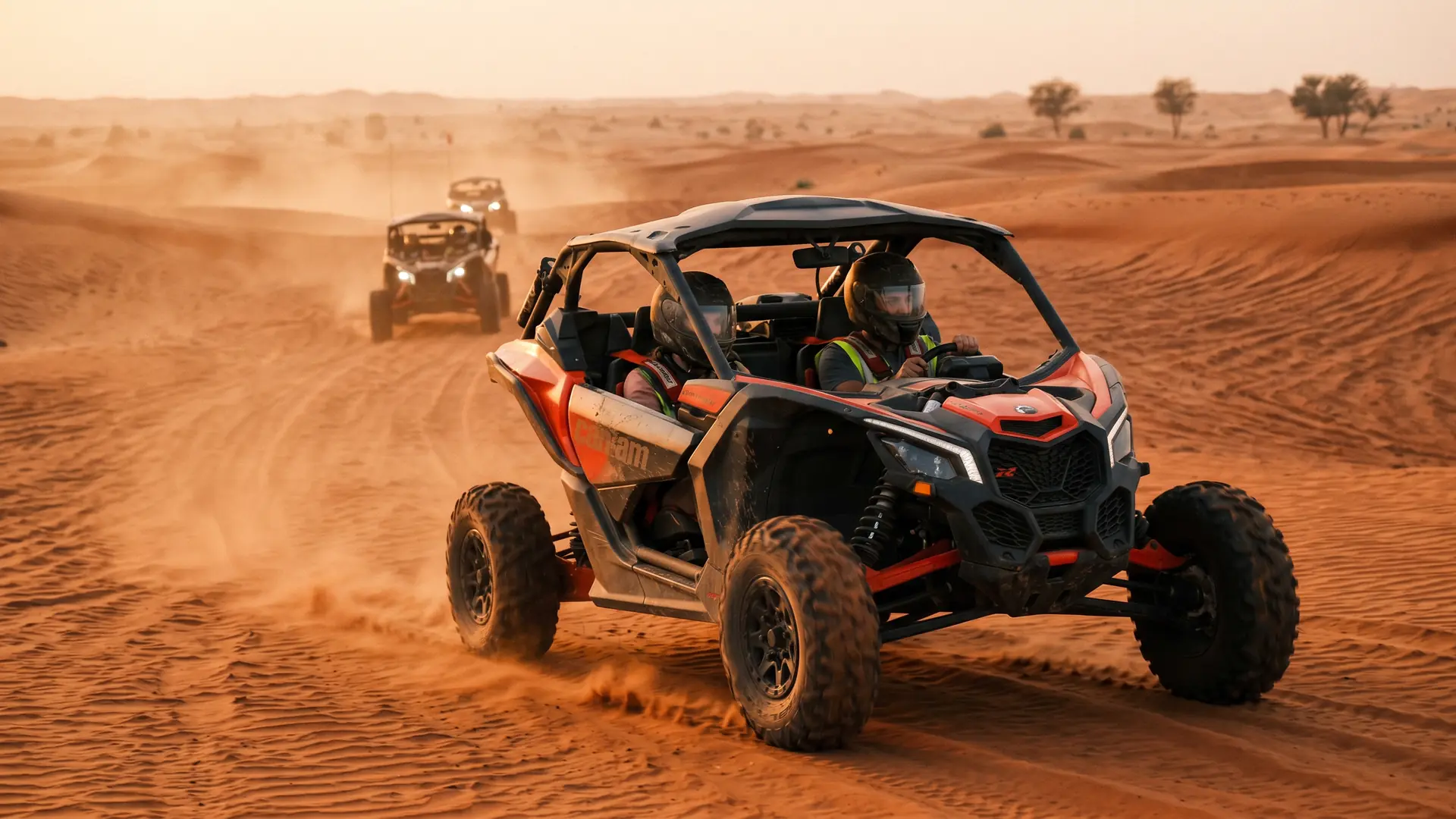
It's worth applying the same scepticism to group and lifestyle shots, sunset silhouettes, big convoys kicking up sand, none of which tell you anything about the specific machine, duration or inclusions behind a given price. Those photos sell the idea of the day, which is a fair thing to sell, but they shouldn't be the only evidence you're working from when the actual booking decision comes down to one specific car and one specific number.
A quick way to test any listing: pick the exact price you're considering and ask what machine, by name, that specific figure buys. If the photo and the answer match, you're in good shape. If they don't quite line up, that's worth a follow-up question before anything else.
What does a fair cancellation and refund policy actually look like?
A fair policy states plainly what happens if the operator cancels for weather, usually a free reschedule, not a refund fight, versus what happens if you need to cancel yourself, with a clear cutoff for how close to the booking a free change is still possible.
Weather cancellations should never cost you money, since sandstorms and heavy wind are the operator's call to make, not yours. A fair policy moves your slot to the next available window at no charge, the way sessions here get shifted rather than simply cancelled when conditions turn. If a listing is silent on what happens when the operator has to cancel, that silence is itself worth asking about before you pay anything.
Rider-initiated changes are a different question, and a reasonable policy gives you a specific cutoff, say 24 or 48 hours, rather than a vague "case by case" answer that only gets resolved once you're actually trying to change something. Ask for the exact number of hours or days, in writing if possible, and be wary of a policy that can't produce one.
Deposits are where this gets tested in practice. A fair operator explains upfront whether your advance payment is refundable, partially refundable past a certain cutoff, or credited toward a future date rather than returned as cash, and doesn't wait until you're actually cancelling to reveal which one applies. Since most of this guide's questions are best asked before you pay, this is one worth asking at the very top of that list.
None of this needs to feel adversarial to ask about. A well-run operator has answered these questions hundreds of times before and has the policy ready without hesitation, which is itself a reasonable proxy for how they'll treat you if something actually does go wrong on the day.
Is the cheapest listed price ever actually the best value, or does something usually give?
Not automatically, no. Sometimes the cheapest listed price is a genuinely fair rate on a smaller machine, and sometimes it's the same four gaps covered earlier in this guide, shorter duration, smaller machine, hidden extras, per-person pricing, wearing a low number as a disguise.
There's nothing wrong with wanting the lowest number on the page; plenty of smart travellers do, and a smaller machine for a shorter session at a genuinely lower price is a perfectly reasonable choice for a first taster. The entry point here, a 30-minute Polaris RZR at AED 599, exists for exactly that reason. The issue isn't cheapness itself, it's cheapness that turns out to be an illusion once duration, machine and inclusions are actually compared line for line.
The practical test is whether a lower number survives the questions this guide has already walked through: does it name the machine, state the duration, disclose what's bundled in, and clarify per-buggy versus per-person? A price that answers all four honestly and still comes in lower is a genuinely better deal. A price that dodges two or three of them isn't cheaper, it's just less specific, and the difference usually shows up as an unpleasant surprise at the desk rather than in the price itself.
Reviews are a reasonable last check, not because star ratings prove anything on their own, but because a pattern of comments mentioning matched quotes, named machines and no last-minute add-ons tells you something a price list alone can't. What riders actually say after paying tends to confirm or contradict a listing faster than any amount of comparing numbers in isolation.
Something does usually give when a price looks meaningfully lower than everything around it, whether that's the duration, the machine, or an add-on waiting at the desk. It doesn't mean walk away. It means ask the questions from earlier in this guide, get specific answers, and then decide whether the lower number is actually the better deal or just the better-marketed one.
People also search for
Guide FAQ
Does a lower buggy price always mean a smaller machine?
Not always, but it's the most common reason behind a lower number. Confirm the exact model and engine size against the price before assuming it's simply a better deal.
Should I pay the full amount upfront, or just a deposit?
Either is normal practice across operators. What matters more is that the payment terms and refund conditions are stated clearly before you pay, not discovered afterward if plans change.
What does "per group" pricing actually mean on a combo package?
It means the quoted figure covers everyone in your party for that booking, not each person individually. Confirm your exact headcount when asking for the quote so the number reflects your group.
Is it normal for an operator to ask about my experience before confirming a booking?
Yes, and it's a good sign rather than an inconvenience. Screening for machines like the KTM dirt bikes protects both the rider and the equipment, and an operator who skips this step entirely is worth a second look.
How do I know if the reviews on a booking page are real?
Look for specifics: named machines, exact prices, particular guides or dates, rather than generic five-word praise. Genuine reviews tend to mention details a fabricated one wouldn't bother inventing.
What's a reasonable amount of notice for a same-day price change?
None, ideally. A price confirmed on WhatsApp before you travel to the desert should be the price on the invoice. Same-day increases with no clear reason are worth questioning on the spot.
Does a higher price always mean a better or newer machine?
Usually, but not automatically. Horsepower, seat count and suspension travel all affect price, so a higher number should map to a specific upgrade you can name, not just a vaguer sense of being the "premium" option.
Should hotel pickup be included in the headline price?
It doesn't have to be, as long as it's disclosed as a separate line before you pay rather than assumed. Pickup here is billed separately and confirmed upfront, which is the fairer version of that arrangement.
What's a red flag when comparing two nearly identical desert packages?
A price with no duration, no named machine and no stated inclusions attached to it. Vagueness across all three at once is a bigger warning sign than any single missing detail on its own.
Is it worth booking directly with an operator instead of a third-party listing site?
Often, since a direct booking usually means clearer communication and a single point of contact if something needs to change. It isn't a strict rule, but a direct WhatsApp conversation tends to surface the details this guide covers faster than a listing page alone.

 AED 599